Boss Balloon Font: Playful Type for Small Business Branding
I was standing in my tiny studio kitchen, staring at a stack of blank bakery boxes. Same recipe, same care, but the labels from the local print shop felt forgettable. They didn’t match the warm, whimsical feeling of the cookies inside. That’s when I started hunting for a typeface that could do more than just state the product name — something that could smile at the customer before they even lifted the lid. Boss Balloon popped up, and honestly, it changed the way I think about everyday packaging.
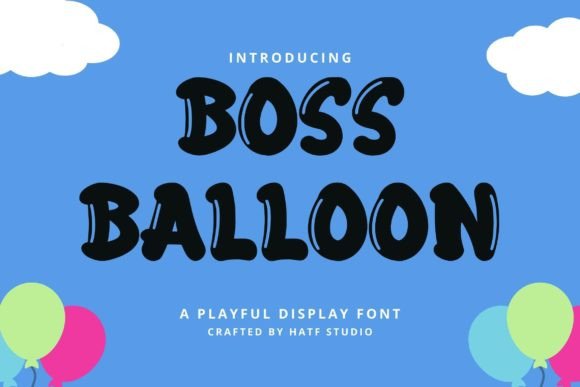
Boss Balloon is a display font with a bouncy, handwritten rhythm. Its letters don’t sit stiffly on a baseline; they dance with a natural, easygoing motion that feels like custom lettering without the custom price tag. The personality sits somewhere between a cheerful market stall sign and a beautifully imperfect hand-painted window. For business owners who aren’t professional designers, that’s gold — it brings an instant, approachable charm to everything from price tags to social media banners.
First Impressions on Real Customer-Facing Materials
I tested Boss Balloon on three items that small businesses actually use: a candle label, a café menu header, and an online shop banner. In every case, the font pairing possibilities felt wide open. Paired with a clean sans serif font for body text, Boss Balloon became the friendly host of the design — the voice that says “welcome” while the smaller type explained the details. The letterforms have a slight bounce and irregular stroke width that mimic real marker pen texture, which adds warmth without sacrificing readability at larger sizes.
On a frosted glass candle jar wrap, the font’s playful loops and slightly rounded terminals made the scent name feel like a bespoke gift rather than a mass-produced item. When I placed it on a café menu above the seasonal specials, it broke up the grid of standard options and immediately guided the eye. That’s a subtle superpower: modern typography isn’t just about looking good; it’s about directing attention, and Boss Balloon does that with personality.
Where This Playful Display Typeface Shines Brightest
If you’re wondering where to use Boss Balloon without overwhelming a design, think short, punchy placements. This is a font built for headlines, product names, and decorative accents — not blocks of paragraph text. I found it exceptionally useful for:
- Logo design for boutiques, bakeries, and creative studios
- Product labels and packaging design titles
- Thank-you cards and sticker sheets
- Social media graphics and Instagram promotion templates
- Website hero banners and online shop announcement bars
- Flyer headers for pop-up markets or workshops
- Menu item names and price highlight callouts
Because the font carries so much character on its own, it becomes a memorable visual signature. A handmade soap brand could use it across lip balm tubes, tissue paper stamps, and table signs at a craft fair, instantly knitting the experience together. That consistency is what builds a recognizable brand identity — not a logo alone, but the repeated visual language customers start to trust.
Readability, Sizing, and Real-World Usage
One concern I always have with handwritten font styles is legibility at small sizes. Boss Balloon retains its personality down to about 14pt on printed tags, but I’d advise keeping it above 10pt only if the surface is smooth and well-printed. For mobile screens and social media thumbnails, anything smaller than around 18pt-20pt might lose the bounce that makes it special. Use it large for impact, then let a supportive serif font or straightforward sans serif handle the details. On product mockups, it looked stunning at 36pt on flat-lay candle shots — the kind of image that stops a scroll.
When putting together a design, I always check how the font behaves on curved surfaces like bottle necks or package edges. Boss Balloon’s organic baseline means it doesn’t look stiff even when slightly warped for a 3D mockup, which is a huge plus for packaging design prototypes. The characters have enough breathing room that they don’t tangle together, a common issue with more decorative script fonts. It’s forgiving for non-designers who are just dropping text into a Canva frame.
Pairing Boss Balloon with Supporting Typefaces
The right font pairing turns a good design into a polished one. My go-to combo during testing was Boss Balloon for the focal word and a crisp geometric sans serif font like Montserrat or Work Sans for descriptions and contact info. The contrast between playful irregularity and clean structure creates a professional balance that small business owners can use confidently. For a softer, more editorial feel, I tried it with a light serif font such as Cormorant Garamond for product descriptions — it gave an artisanal, magazine-like lift to a candle label without feeling fussy.
Avoid pairing Boss Balloon with another heavily stylized display font or script font; the competition will muddy both voices. Instead, let it be the star, and use supporting modern typography that acts like a good frame — present but not demanding attention. This principle works beautifully across social media graphics, where a single headline word in Boss Balloon over a lifestyle photo can carry the entire message.
From Thank-You Cards to Instant Brand Recognition
Imagine unboxing a customer order: a simple kraft mailer opens to reveal a tissue-wrapped ceramic mug. The thank-you card tucked inside is no longer a generic “thanks for your order” note; it greets the buyer with a warm, hand-lettered feel that echoes the shop’s banner and Instagram posts. That’s the connective tissue small businesses often overlook. A creative font like Boss Balloon, used intentionally across touchpoints, makes a brand feel more established and human. It says, “I paid attention to the little things.”
When I advised a friend who runs a tiny skincare studio, she incorporated Boss Balloon on her oil serum boxes and appointment reminder cards. She didn’t need a full rebrand — just swapped the display type on her headings. Suddenly, the whole collection looked more cohesive, and she felt prouder handing samples out at pop-ups. That’s the quiet confidence a well-chosen typeface brings. It’s not about shouting; it’s about being unmistakably you.
For online sellers, the font translates seamlessly into web design elements like newsletter headers, promotional banners, and digital ad graphics. Because it’s a display font, it grabs attention in the crowded scroll of an Etsy search or an Instagram feed. Pair it with clean product photography, and the text becomes part of the visual story rather than an afterthought.
What to Check Before Using a Commercial Font Across Your Business
Before you commit to any premium font for products or client work, there are a few technical details that make all the difference. I always dig into:
- File formats: Ensure OTF or TTF files are included so the font works across design software and standard office tools.
- Character set: Check for alternates, ligatures, and multilingual support if you serve a diverse customer base or want to use the font for decorative swashes. Boss Balloon typically includes a solid set of standard characters with the playful quirks intact, but always confirm the glyph coverage if you need special accented characters.
- Weights and styles: Some display fonts come in a single weight; that’s perfectly fine for headers. Just know that you’ll need a complementary typeface for body copy.
- Commercial licensing: This is critical. Can you use the font on product packaging, merchandise, digital downloads, or templates you sell? Make sure the commercial font license covers your specific use case — many desktop licenses limit the number of products or impressions, while extended licenses often cover resale of physical goods and unlimited digital use.
Taking five minutes to read the license file can prevent heartache later, especially if you plan to build multiple product lines or sell branded templates. I’ve seen small shops scramble when their chosen creative font turned out to be for personal use only, so consider this your friendly reminder to double-check.
What I appreciate about a thoughtfully crafted display font like Boss Balloon is that it doesn’t try to be everything. It knows its role: to add warmth, personality, and a hand-drawn touch where it matters most. For small business owners, that’s often the place where a customer decides whether something feels mass-produced or genuinely made with care. Whether you’re refreshing a menu, printing new hang tags for a clothing boutique, or creating a cohesive set of Instagram templates, the right typeface lifts the entire brand without demanding a design degree.
Typography is one of the quietest, most powerful design assets in your toolkit. It shapes first impressions before anyone reads a single word. Boss Balloon delivers that spark of personality — imperfect, friendly, and unmistakably human — that helps a small business feel more memorable. And honestly, isn’t that what we all want our packaging, our posts, and our shop windows to say? “Hi there, we made this for you.”